2026 Reunion Spotlight: Dr. Kevin Williams
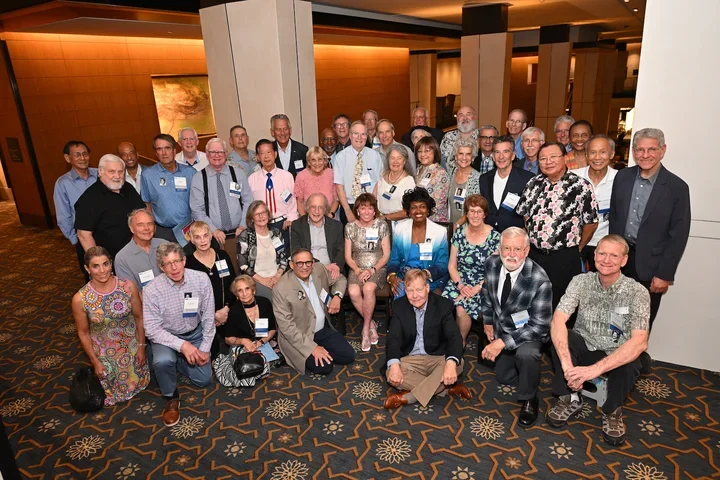
Q&A with Dr. Kevin Williams, MD Class of '86, in advance of his 40th class reunion
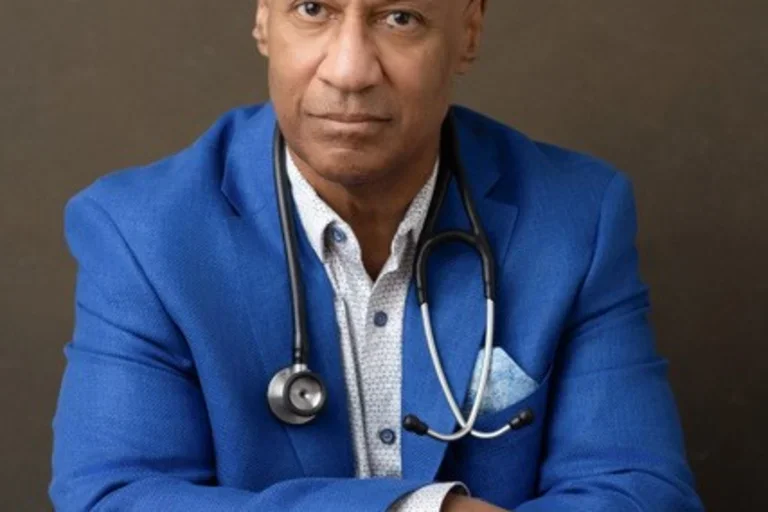
Tell us about your journey after graduating from medical school at UCLA:
After medical school, I completed an Internal Medicine residency at Cedars but knew that a clinical fellowship wasn’t for me. At the time, I was more interested in quality of care and cost containment, so I pursued a health research fellowship and master’s in public health at UCLA at the same time. My research was around HIV care in 1989 and specifically access to care early in the HIV epidemic and the impact of access on outcomes.
During my fellowship and afterwards while I was working at Wadsworth VA as a clinical instructor, I did some moonlighting for a physician in HIV private practice. As an LGBTQ community member, I found purpose and pride in taking care of my community. Since this work really resonated with me, I left academic medicine and went full-time into private practice and worked in HIV/AIDS medicine for 8 years. At the time I started in private practice, our treatment options for HIV/AIDS were very limited, with only three medicines that had been FDA-approved; two other drugs were available for through expanded access programs—all of them being in the same nucleoside analogue class. What I valued most about private practice was the intense relationships and deep relationships I developed with the patients. During that period, AIDS was a fatal disease. So doctoring was about taking care of the person, not curing the disease.
As we developed new therapies with different mechanisms of action and combination therapy became the standard of care, AIDS became more of a chronic disease, and my work in private practice evolved into a more general internal medicine practice. This, however, was a practice I knew I did not want to pursue long-term. I had other interests and skills that were not being fully utilized in private practice, and I thought I would pursue a career in healthcare policy and decided my next step would be law school. After earning my JD from Harvard Law School, I ultimately realized that health policy was not the right opportunity for me.
Following Harvard, I moved to NYC to look for opportunities. My sister was working as a pediatric infectious disease specialist in Baton Rouge and was attending the Infectious Disease Society of America (IDSA) conference when she and my brother-in-law met a physician who was working at Pfizer at a minority special interest group dinner. While it took some time, a job opportunity arose when, after connecting with this physician, he alerted me to a position at Pfizer for which they were looking to hire.
I, like many others, was hesitant to enter the pharma world due to the negative stigma surrounding the field. I was drawn to the job because it was working in HIV, which was an area that I was passionate about, and I would have the opportunity to aid the development of a new HIV drug with a novel mechanism of action. It was this occasion that propelled me into a 20-year career there. I was able to grow and expand into leadership roles from team leader to group leader to vice president, ultimately stepping into the Chief Medical Officer role of our Rare Disease organization, which was our smallest business unit focused on diseases affecting populations of less than 250,000, and then stepping into the role of Internal Medicine Chief Medical Officer, which was Pfizer’s largest business unit, responsible for developing medicines that would impact the health of millions of patients. It was an amazing experience to span the spectrum of life-saving medicine development, from very rare diseases to much larger population diseases in the cardiovascular and metabolic area, women’s health, and other areas.
I left Pfizer two years ago, and after taking a year to figure out what was next, I’ve now found my next passion in executive coaching. What I discovered was that in my later years at Pfizer, I found so much joy in developing people and helping them advance in their careers that I wanted to focus on that as the next step in my career journey.
How did DGSOM uniquely prepare you for a career in medicine?
First and foremost, I think about my classmates, our camaraderie, and all that we did together beyond studying in medical school. We were a very close-knit group of students. I had my trepidations going into medical school, after hearing about how cutthroat and intense it might be, and my classmates were wonderful. UCLA’s class offerings provided an amazing education, and we had some incredible professors. I was always challenged, and I was given the opportunity to constantly learn and push myself forward.
I also think that I was uniquely prepared by the breadth of experience that I received working at all the local hospitals. UCLA really set me up for an incredible career.
Can you share a fond memory from medical school?
One of my fondest memories was during my second year, when we put on a variety show for the first-year students with skits and bits, mostly related to medicine. During the first year of medical school, one of the primary courses that stretched through and occupied such a huge chunk of our time was gross anatomy. So, I pitched a skit related to the 1981 musical Dreamgirls, where I dressed up as Jennifer Holliday and lip-synced the hit song, And I’m Telling You I’m Not Going to my cadaver from anatomy class!
What is your proudest professional accomplishment?
My proudest accomplishment was the time I spent in private practice because I was taking care of my community. When I decided to leave academic medicine and join private practice, one of the things I said was “when the AIDS epidemic is behind us, I want to be able to say I was down there in the trenches with my community.” Private practice was one of the most meaningful periods of my life.
Working in HIV and AIDS with the young people living with that disease – many of whom were my age at the time – I saw people who should be at the beginning of their lives, thinking about all the good that was to come. Instead, they were dealing with the end of their lives. I think this experience helped make me a better physician because it made me focus not on the disease, but instead on the person I was treating.
In the words of Patch Adams, “You treat a disease, you win, you lose. You treat a person, I guarantee you, you’ll win, no matter what the outcome.”
Looking back, what were the inflection points that most shaped your path in medicine?
There are four.
The first was when I was a teenager. My father was the third black physician to go into practice in Baton Rouge, Louisiana in 1953. He was a solo practitioner, and in the summers after I became a teenager, when his receptionist went on vacation, I filled in. That experience gave me the opportunity to get up close and personal working in medicine, and those summers really inspired me.
My second inflection point was unexpected. The summer after my junior year in college at Tulane, as an English Literature major, I spent in Europe. While I was in London, my time overlapped with a group from UCLA, and I met another young, gay student who was a UCLA undergrad. We stayed connected through senior year, and as I began applying to medical school, he encouraged me to apply at UCLA, even though I had my heart set on Harvard. I had only ever lived in Louisiana, so Los Angeles had only been something I’d seen on TV. I got an interview at UCLA, flew out to visit, had a magical experience, and fell in love with the beauty of the campus. It was such a different world, but it felt like home. UCLA went from not being on my radar screen to being my top choice (I turned down Harvard!). UCLA put me in the best position in medical school and allowed me to come out, experience the life that I was meant to live, and come into the person I was meant to be.
The third inflection point was moonlighting and treating patients with HIV/AIDS during my fellowship and my time at Wadsworth VA as a clinical instructor. And my fourth was when I joined Pfizer.
You’ll be celebrating your 40th Class Reunion. What would you tell your younger self after so many years of practice?
I’d tell my younger self that life is short, and it passes so quickly. When I graduated from UCLA at the age of 25, 65 – the age I am now - seemed so far off, but it truly got here in the blink of an eye. I’d tell myself to be brave, be bold, be curious, and step outside my comfort zone, because that’s the only way that you grow. And that’s what I’ve tried to continue to do even after 20 years at Pfizer.
I’d also tell myself to keep a sense of humor about life and be able to laugh at not just situations, but also at yourself. Don’t take yourself too seriously. I served on a board of directors for an LGBTQ+ elders services and advocacy non-profit organization, and we built a couple of apartment buildings that served those elders. At the opening of one of the centers, we had the residents/elders write words of advice for the entrance wall. One of the elders wrote “you don’t stop laughing when you grow old, you grow old when you stop laughing,” and that really resonated with me.
What questions should young physicians be asking themselves earlier than they typically do?
There are 4 questions I think everyone should ask early on in their journey and keep asking as their journey progresses.
- Purpose: What is my purpose?
- Values: What are my values? How do I want people to view me?
- Passion: What do I love doing and how do I make sure that I continue to do something related to that?
- Legacy: How do I want people to remember me? What is it that I want to leave to others?
My father was an incredible physician and man, and when he died in 2000, one of his patients came up to me at his funeral and said, “If you are half the man your father was, you are a great man.” I’ve always said that when I die, I want my headstone to say that I was half the man my father was.
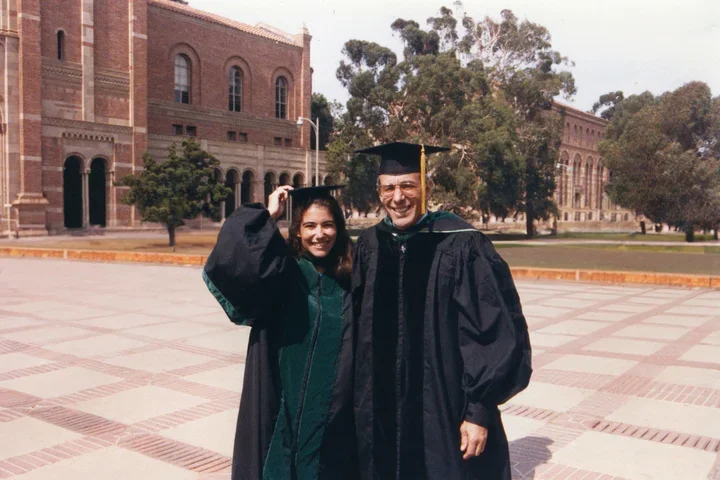
When you reached out to put together this interview, it made me start to think about my time in medical school. I remembered one of the privileges of med school was that I got to deliver the commencement address for our class. There happened to be an ABC Nightline News crew there that day, shooting b-roll for a segment on the state of American medicine – of course, I didn’t know this until later. My sister saw them filming, went up to the director, and asked him for a copy of that tape. He sent her a copy of the tape on VHS (it was 1986!). About 13 years ago, I had all my home movies, including that VHS, converted to digital. Yesterday, I watched that video for the first time in 30 years, and it was so much fun to see. The best part of the story: After commencement, I was doing my residency at Cedars - a month-long rotation in the cardiac critical care unit. One night I’m on call, and a nurse tells me that there is a patient who wants to see me. When I entered his room, he said to me, “You don’t know me, but I remember you. I’m the director for ABC Nightline News, and I filmed your commencement speech.” It is a small world!
Related Articles