Serving those who serve
Meet three hospitalists in the Division of Veterans Affairs
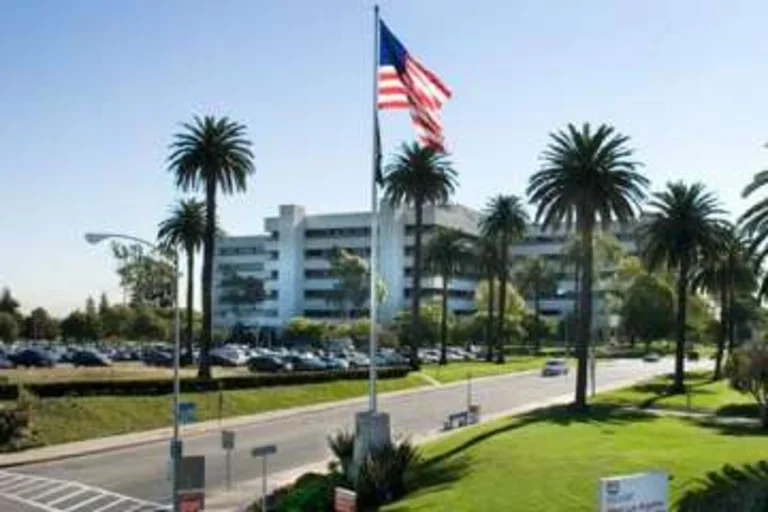
Image of West Los Angeles VA Medical Center (Photo credit UCLA Health)
The partnership between the David Geffen School of Medicine at UCLA and the VA Greater Los Angeles Healthcare System (VAGLAHS) dates back to 1947, the same year the medical school appointed its first dean.
Today, the institutions’ departments of medicine are fully integrated, working as one academic community across patient care, education and research.
Housed within the medical school’s Department of Medicine, the UCLA Division of Veterans Affairs includes more than 200 faculty members who care for veterans, conduct research or train future physicians.
At the VA, hospitalists provide the same essential inpatient care found across hospitals, managing patients’ medical needs throughout their stay while coordinating with specialists and the broader care team.
Christopher “Chris” Moriates, MD is the chief of hospital medicine and a professor of clinical medicine at the David Geffen School of Medicine.
“Caring for patients is at the heart of everything we do as hospitalists. Our division brings together world-class clinicians, researchers and educators who advance care and inspire the next generation of physicians. At the VA, we have the special privilege of doing this work in service to those who have served our country,” said Dr. Moriates.
Meet Dr. Cantor: Driven by a shared mission
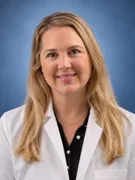
Emily Cantor, MD, first joined the Hospitalist Division at VA Greater Los Angeles in 2012 after residency.
It was a full-circle moment for Dr. Cantor. Her grandfather played football for UCLA with Jackie Robinson before serving in the U.S. Army Air Corps during World War II. He was also a VAGLAHS patient.
Now a clinical professor, Dr. Cantor has seen the division grow to more than 25 hospitalists and calls joining the division “the best decision I ever made.”
In addition to seeing inpatients, Dr. Cantor is a medical education leader. As one of the associate directors of the Medical Education Pathway, she helps to prepare UCLA Health residents for careers as clinician-educators. This includes support for scholarship projects, and Dr. Cantor recently coordinated with one of her colleagues, Evan Michael Shannon, MD, MPH, to give a presentation on identifying and responding to microaggressions.
“My mission and the VA’s mission are very aligned – focused on both patient care and our veterans as well as education. That alignment really makes this such a special place to work,” said Dr. Cantor.
Meet Dr. Shannon: Improving care through research
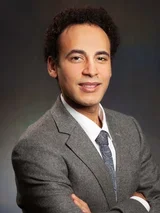
As a medical student, Evan Michael Shannon, MD, MPH, remembers hearing Dr. Moriates speak at a conference.
Now a hospitalist and clinician investigator, Dr. Shannon holds joint appointments with the VAGLAHS Center for Healthcare Innovation, Implementation, and Policy as well as the Division of General Internal Medicine and Health Services Research at UCLA. His research interests include complex intervention and the effects of social determinants on vulnerable populations.
Most recently, Dr. Shannon has been studying the impact of extreme heat events on veterans experiencing homelessness. For his work, he was awarded a Career Development Award by the VA Office of Research and Development.
He shared that military service is a “tradition that runs deep” in his family. Currently, his cousin serves in the U.S. Navy, while both of his grandfathers and his uncle are veterans.
“[Through VAGLAHS and UCLA], I think we’re making a mark – improving healthcare for our veterans and improving medical education for students and trainees. It’s an exciting environment to be in,” said Dr. Shannon.
Meet Dr. Moolchandani: Paying it forward
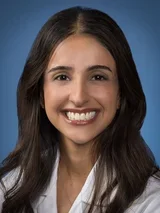
Originally from Tennessee, Priyanka Moolchandani, MD, completed her internal medicine residency at UCLA Health. After her residency, she served as a chief resident for quality improvement (QI) and patient safety at the West Los Angeles VA Medical Center.
Today, Dr. Moolchandani is a clinical assistant professor based at the West LA VA and an associate director of QI, mentoring and supporting chief residents in the same program she completed.
But what’s affected her most as a person and a physician is hearing her patients’ stories.
“I think that’s what keeps me coming back – to give back to someone who’s willing to sacrifice so much for our safety and to be able to help them a little bit in their healing journey,” said Dr. Moolchandani.
While she says she always knew she wanted to care for veterans, Dr. Moolchandani also has a personal connection to the armed forces. Two of her cousins served in the U.S. Army, and her father-in-law served in the U.S. Navy.
Shared sentiments
When asked to describe what it means to care for veterans, Drs. Cantor, Shannon and Moolchandani each offered a different word, reflecting the sense of purpose they share in their work:
“Rewarding.”
“Gratitude.”
“Blessed.”