Q&A: Meet the new Vice Dean for Education Katherine Julian, MD
Dr. Julian discusses the power of academic medicine and the importance of lifelong learning
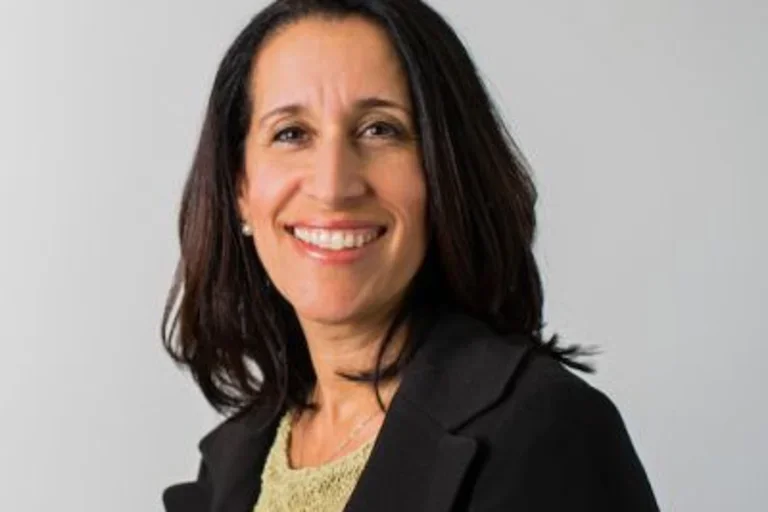
Katherine “Kathy” Julian, MD, was appointed the Vice Dean for Education in July and has been in her role since October 1, 2026. We connected with her to get to know her better and learn more about her vision for medical education.
Note: This Q&A has been edited for length, clarity and brevity.
Welcome to UCLA Health and the David Geffen School of Medicine! What drew you to UCLA?
Kathy Julian (KJ): I am a product of the University of California system, having completed my undergraduate education at UC Berkeley and my medical school and residency training at UC San Francisco.
I strongly believe in the mission of the University of California, which is to improve lives through education, research, healthcare and service to the people of California (and beyond).
UCLA offered an extraordinary opportunity to advance that mission on behalf of learners. DGSOM has exceptional students and trainees, as well as deeply committed faculty and staff, with tremendous capacity for innovation and impact in medical education. It is an honor to work alongside them to prepare the next generation of healthcare leaders.
What excites you about your role and UCLA’s medical school?
KJ: What excites me most is the opportunity to help shape the future of medical education. I believe medical education is a powerful means of improving the health of communities.
As a medical educator and primary care physician, my greatest joy has come from the mission-driven work of preparing the next generation of physician leaders. It is a privilege to serve as Vice Dean for Education at the David Geffen School of Medicine (DGSOM) and help develop, educate and support physician leaders across the continuum, from pathway programs and the MD program to residency/fellowship training and continuing professional development.
Together, we can educate physicians who will improve care for our communities.
You mentioned you’re a primary care physician. What motivated you to move into administration?
KJ: I always had a love for teaching, beginning when I served as an anatomy tutor in my second year of medical school.
Early in my career, I became a residency director of a primary care internal medicine residency program because I enjoyed mentoring learners, teaching in the clinical environment and creating curricula.
As my career progressed, I moved into administration because I found great satisfaction in working with learners, faculty and staff to build systems and environments that develop and support learners so that they can learn, grow and thrive.
What are some of your goals for the medical school and its programs?
KJ: My primary goal is to ensure that DGSOM provides an exceptional educational experience that prepares our learners not only for the medicine of today, but also for the rapidly changing future of healthcare.
I want us to foster a learning environment in which people feel supported, challenged and inspired to reach their full potential. That means investing in our learners and educators, embracing innovation, preparing all our trainees to appropriately harness technology without compromising essential critical skills, developing life-long learners, strengthening community and ensuring that our educational programs evolve with our health system.
Ultimately, I hope every learner leaves DGSOM fully prepared to serve, improve community health and lead with excellence.
You’ve also said your research has focused on educating the next generation. What role should mentorship play in medical education, and why is mentorship important to you?
KJ: One of the great privileges of academic medicine is the opportunity to help shape the next generation of healthcare professionals.
Mentorship has always been one of the most rewarding aspects of my career, and I view it as an important responsibility. Mentors offer advice, guidance and support, particularly when learners encounter challenges or barriers. Mentors foster belonging, encourage reflection, engage in difficult conversations and provide constructive feedback that helps mentees grow.
Ultimately, mentorship is one of the most important contributions we as medical educators can make to develop our future leaders.
Your grandfather is the trailblazing chemist Percy Julian! How have his scientific achievements and his legacy impacted or inspired you?
KJ: My grandfather’s legacy inspires me in my work as a physician and an educator.
He encountered tremendous adversity on his path to becoming a chemist, yet his perseverance, determination and courage enabled him to overcome numerous barriers placed before him. He believed deeply in the power of education and in using science to improve the health of others. His example taught me the value of education and the responsibility to use the opportunity and skills gained from education for the greater good.
I strive to honor his legacy by helping the next generation of physician leaders pursue their potential and use their talents to advance health.
What makes an academic health center like UCLA Health – or the University of California system more broadly – so special?
KJ: The University of California system is special because it brings together education, research, clinical care and public service all in the service of the people of the state of California, the nation and the world.
UCLA is particularly well-positioned to fulfill this mission because of its leadership in all of these realms, its culture of innovation and creativity and the opportunity to collaborate across schools and programs. An academic health center like UCLA Health allows learners, educators, clinicians, researchers and community partners to work together to translate discovery into better education, clinical care and healthier communities.
What advice do you have for today’s medical students and trainees at DGSOM?
KJ: I have three pieces of advice.
First, remember that the purpose of what you are learning is not simply to pass an exam or complete a rotation, but to develop the knowledge and skills to care for the patients of today and the patients of tomorrow.
Second, maintain your humility. It is a privilege to care for patients at their most vulnerable moments. Approach patients and colleagues with curiosity, ask questions, acknowledge what you don’t know and always be willing to ask for help because medicine is a ‘team sport.’
Finally, embrace lifelong learning. Medicine is changing rapidly, and much of what we know today will evolve as new evidence emerges. That is part of the beauty of medicine: there is always something new to learn.