A Legacy of the Heart: How One Unique Collection Advances Education and Research Discovery

Pictured: (From left) Drs. Kalyanam Shivkumar, Michael Fishbein and Sarah Dry stand in front of the newly dedicated Michael C. Fishbein, MD Heart Collection, which was made possible thanks to their collective partnership
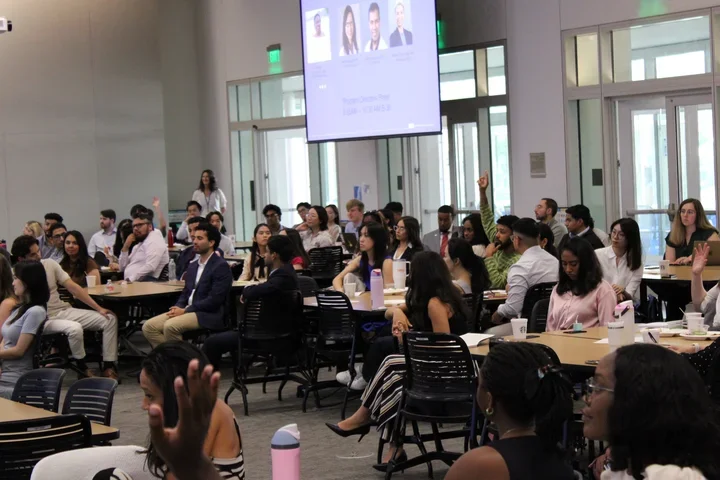
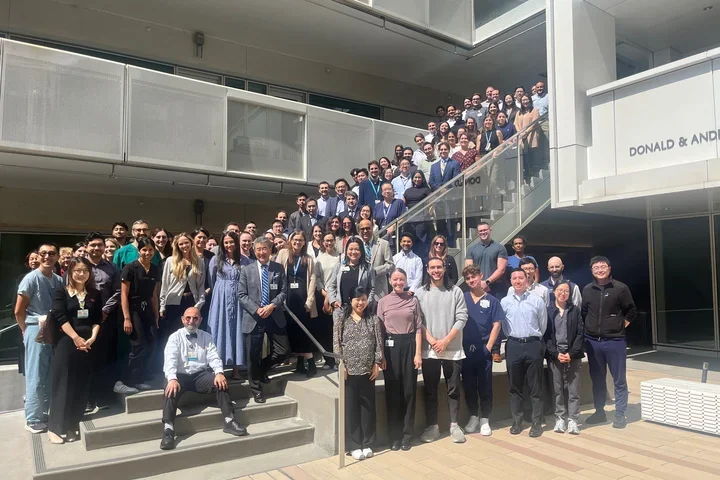
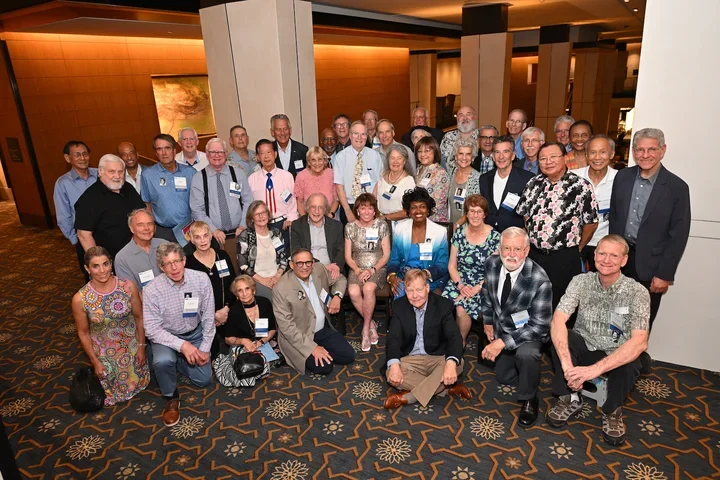
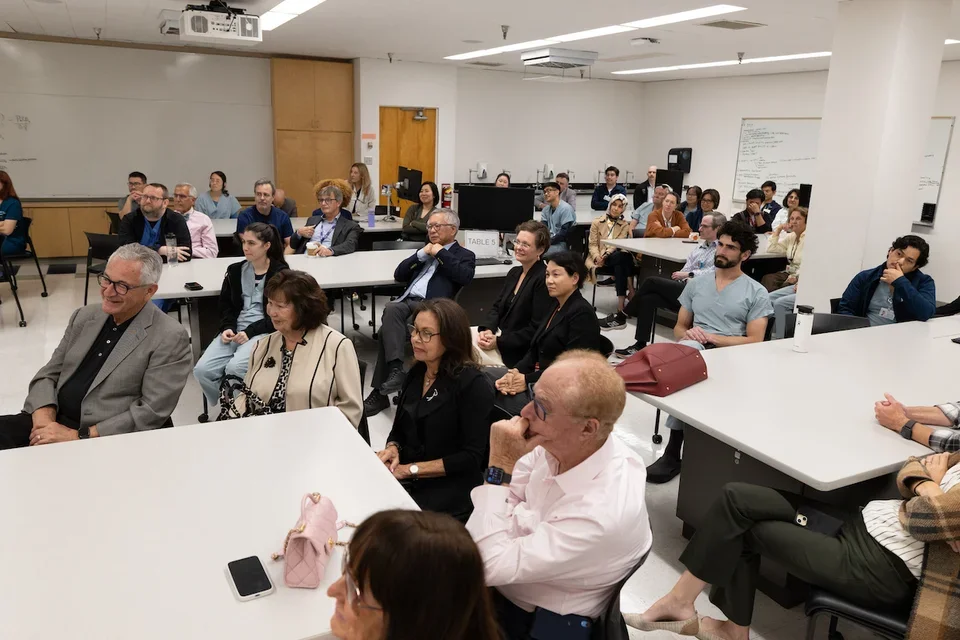
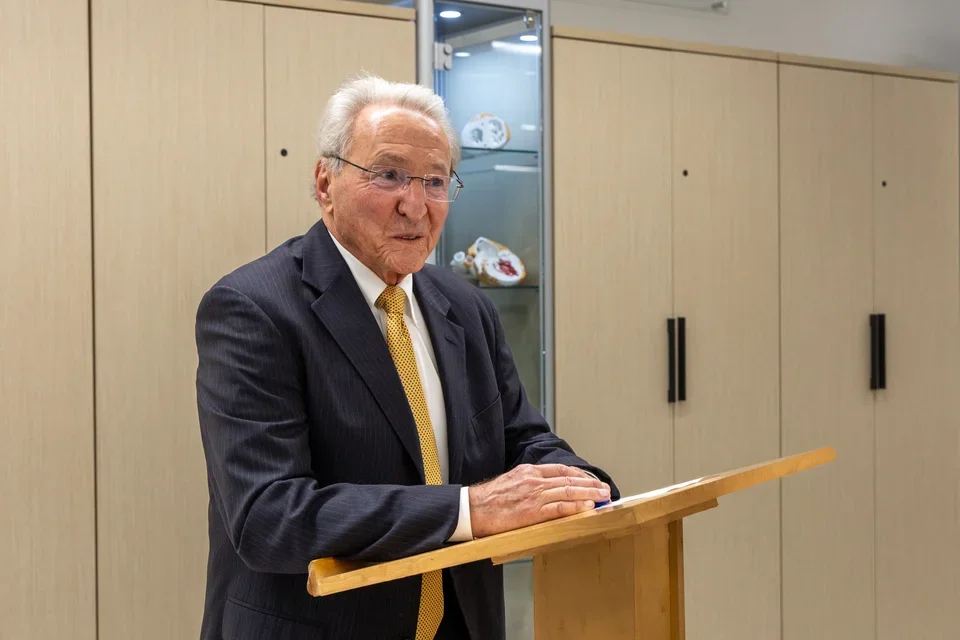
On June 8, 2026, more than 70 colleagues, residents and special guests came together to celebrate the contributions of Michael C. Fishbein, MD, distinguished professor of pathology and laboratory medicine and the former chief of autopsy, cardiovascular and pulmonary pathology at the David Geffen School of Medicine at UCLA. The dedication ceremony was held at the Center for Health Sciences and honored his influential career in cardiovascular and autopsy pathology, his 51 years as an educator, and one of his defining achievements: his heart collection.
The Michael C. Fishbein, MD – Heart Collection includes 1,000 human heart specimens, gathered from decades of meaningful donations. Thanks to a partnership with Kalyanam Shivkumar, MD, distinguished professor of medicine at DGSOM; the Amara-Yad Project; the UCLA Division of Cardiology and the UCLA Department of Pathology and Laboratory Medicine, the preserved specimens are now housed in a dedicated cabinet within a quiet medical classroom, ready to be referenced.
Balancing Education and Respectful Gratitude
“I started with a dream,” said Dr. Fishbein of the collection and its formalized space. “What made it real was having colleagues who could bring it to life. Thanks to their efforts, we were able to secure the space and resources to make the collection truly usable. Most important, of course, we owe a great debt to the donors – the patients and families – who made this possible.”
Already, students and faculty are interacting with and learning from the collection in the new space. Once housed in multi-specimen storage, hundreds of hearts have been individually sealed to facilitate teaching and evaluation.
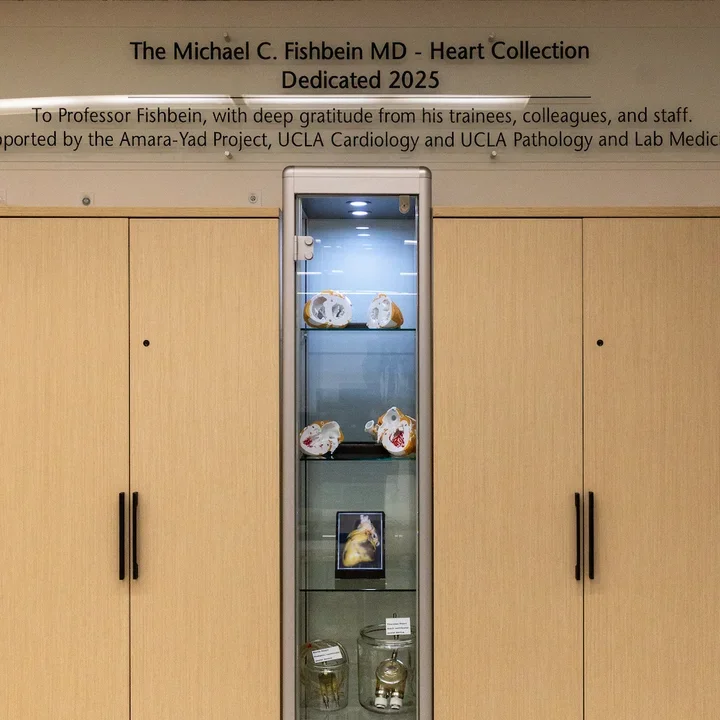
“We wanted something not fully public, but still accessible—an appropriate space where groups could gather,” shared Sarah Dry, MD, chair of pathology at the David Geffen School of Medicine. “It is essential the collection is treated with respect. We chose a medical school lab space with large tables where students can interact with specimens alongside their professors. There is already a lot of teaching happening with these hearts.”
Along with the infinite impact of the collection itself, all collaborators agree on another point: without Dr. Fishbein, there would be no collection at all.
“Dr. Fishbein is one of the greatest scholars of cardiac pathology in the world. We are incredibly fortunate to have him here,” said Dr. Shivkumar.
He met Dr. Fishbein in the mid-1990s, first as a student himself. “He is actively organizing this heart collection for the future, and it is already contributing to high-level science. It will likely become one of the foremost pathology collections in existence.”
A Career-Long Vision for Innovative Impact
With a small project team, Dr. Fishbein is cataloguing the 1,000-plus specimens, some of which go back to the 1950s and 60s. He explained, “Ultimately, we are going to have a database. Let's say someone wants to look up all the hearts we have with amyloidosis; they'll be able to locate and view them.”
Establishing a heart collection had been on his mind since the early days of his career. “I thought it would be great to someday have a lab where someone could come and look at the specimens I’d saved,” he said. “They could look at the original patient record, the EKGs, the imaging, and it would be a terrific teaching and learning opportunity.”
Dr Fishbein’s passion for his work is contagious. “I’m still learning, and that’s what makes it so rewarding. I hope others will get as much out of this as I have.”
Collected for Meaningful Impact
Already, colleagues have approached Dr. Fishbein with research opportunities. He has also made connections of his own. After hearing Dr. Ming Sing Si present his research on Fontan physiology, which describes a surgically altered circulation for patients born with a single functional heart ventricle, and its links to pediatric heart failure, Dr. Fishbein reached out.
“I told him, ‘I have about 50 relevant hearts in our collection going back years. Can you use them in your research?’” Dr. Fishbein smiled as he recounted the moment. “Now, we have a research grant pending that’s going to partially involve looking at those specimen cases.”
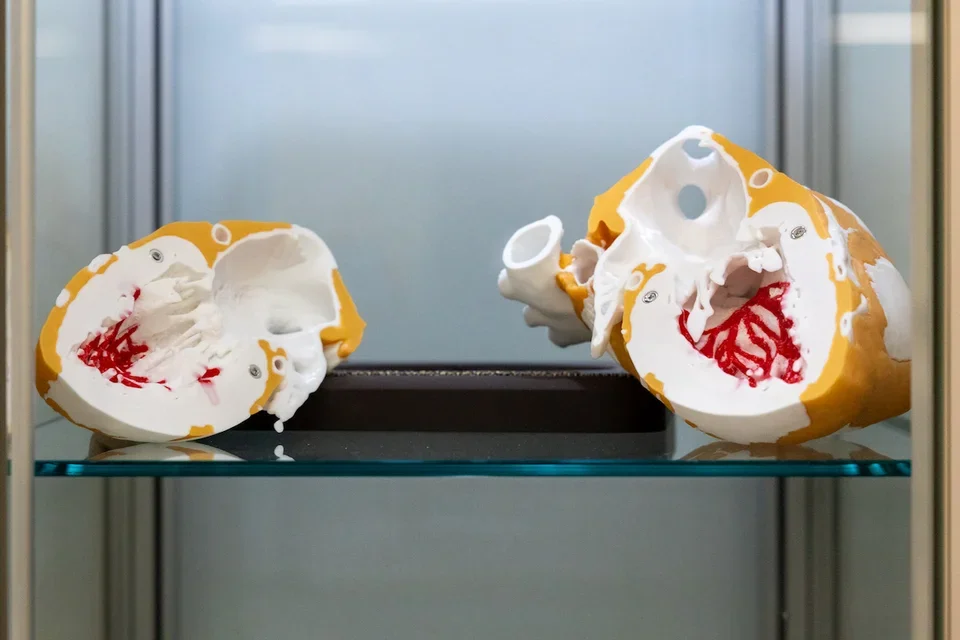
Dr. Fishbein is also deeply connected to Amara Yad, founded and led by Dr. Shivkumar. The initiative’s first project is to publish a new series of anatomical atlases to surpass the widely used Pernkopf atlases, which feature reference drawings from the 1930s that were later revealed to be deeply rooted in Nazi terror. The work is close to Dr. Fishbein’s own heart; his sister is a survivor of the Holocaust, as were Dr. Fishbein’s parents.
“Our cardiac collection is going to be a resource for creating at least one new atlas,” Dr. Fishbein shared, “and I know Dr. Shivkumar has big plans for others.” He credits his friend and colleague with stepping forward to help make the heart collection possible, as well as bringing the collection into the literal light – it was the first time specimens in his collection had been professionally photographed.
“It’s an extremely ambitious project,” Dr. Shivkumar explained. “There will be eight volumes on the heart alone. But we have a responsibility to act. For me, and I know for Dr. Fishbein as well, this project is a way of acting.”
A Legacy of Education and Inspiration
Before appearing in Amara Yad’s vital atlases, many of the collection’s specimens made their first educational appearance in Dr. Fishbein’s monthly conference for cardiology, pediatric cardiology, cardiovascular surgery and pathology trainees. For 30 years, these opportunities opened the door to invaluable knowledge for thousands of students.
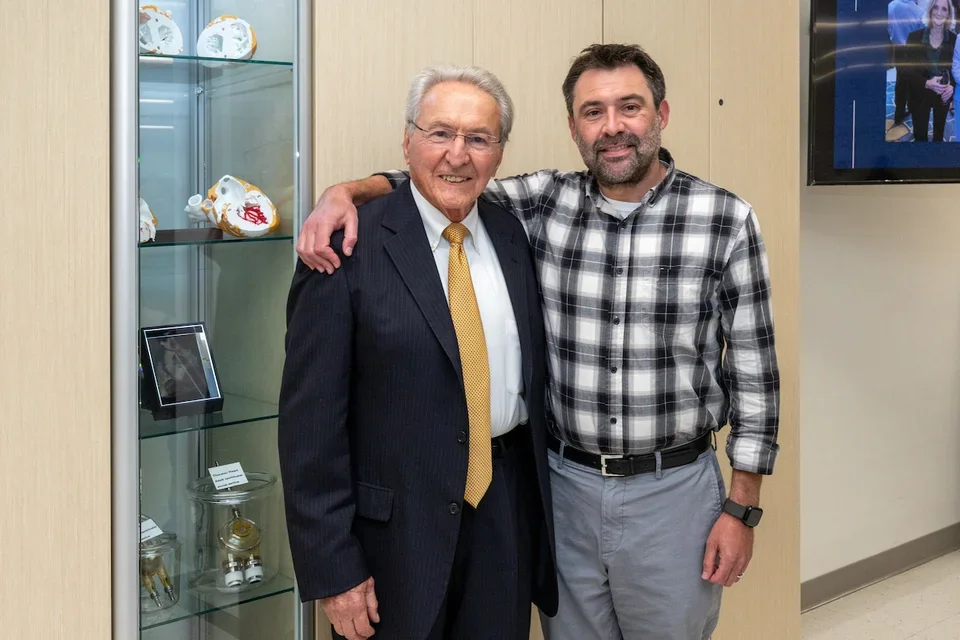
One such inspired pupil? His own son.
Dr. Gregory Fishbein is now chief of cardiovascular pathology, autopsy pathology and pulmonary pathology here at UCLA. “Few have made as significant an impact in the field of heart transplantation pathology as my father. His passion for his work influenced me to study cardiovascular pathology. I’m lucky to share his passion and to work alongside him.”
Beyond UCLA: Reaching Doctors Worldwide
Atsuko Seki, MD, PhD, studied under the UCLA Pathology and Dr. Fishbein. Today, she continues to apply that experience to the department of surgical pathology at Tokyo Women's Medical University Hospital where she now works.
“Dr. Fishbein generously welcomes those who wish to learn cardiac pathology and provides meaningful support and guidance to learners,” said Dr. Seki. “His way of thinking and his approach to disease will continue to influence and inspire the next generation of medical professionals globally.”
Dr. Dry envisions a future where Dr. Fishbein’s heart collection can serve as an educational tool beyond the constraints of physical location. “We have the capabilities here to do hybrid events. I would love for us to host educational conferences, bringing people together to share what we’re learning from this collection.”
Ultimately, that’s what Dr. Fishbein hopes for too: that his work, teachings and collection go on to influence generations of students to come.
“He’s a brilliant teacher,” Dr. Shivkumar said. “That is what makes a university—the people. Not the buildings, but the teachers who shape generations. And at UCLA? Well, Dr. Fishbein is certainly one of the very best.”
Faculty, staff, residents or students who are interested in visiting or utilizing the heart collection for education or research are invited to reach out to Dr. Michael Fishbein directly.
Related Articles