LABEST Week 2026: Where the futures of medtech and bioscience converge
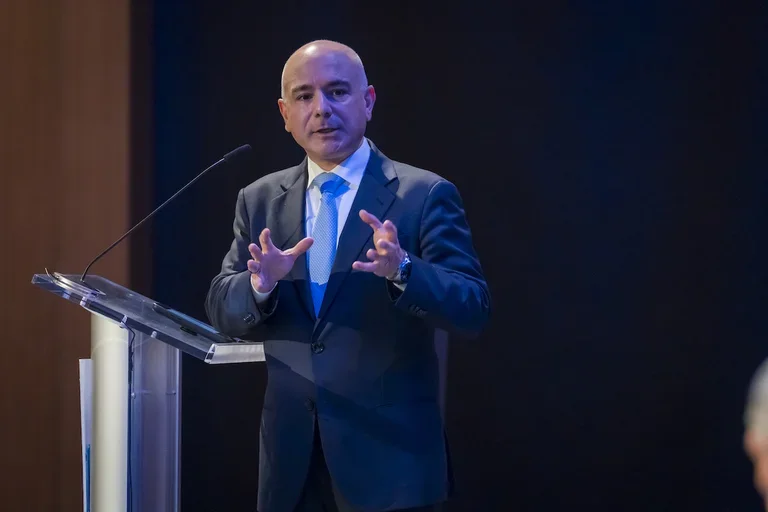
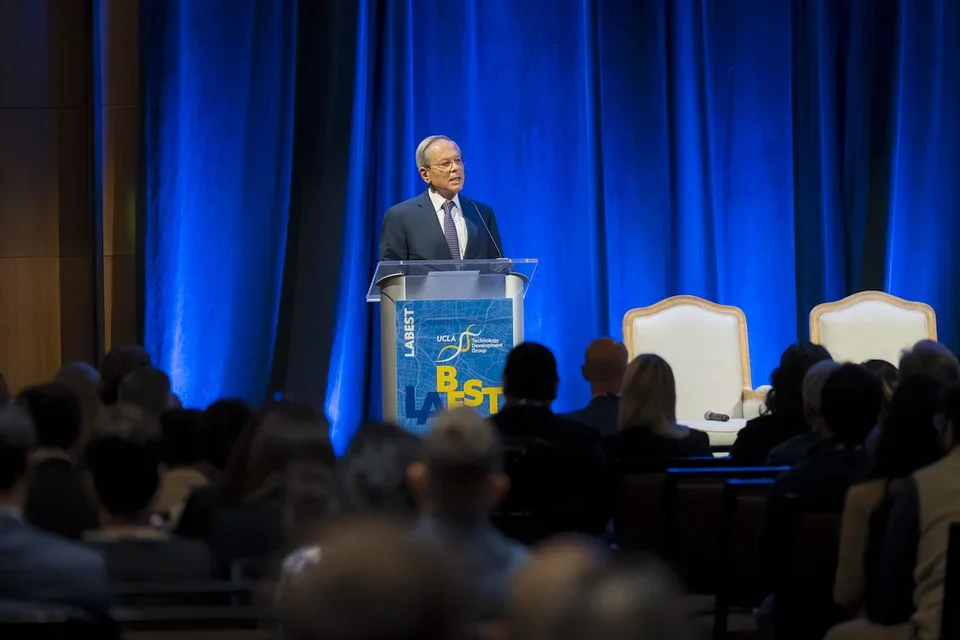
Pictured: Eric Esrailian, chief of the Vatche and Tamar Manoukian Division of Digestive Diseases and health sciences clinical professor of medicine, moderates a panel on “Microbiome Science at UCLA: From Mechanics to Translation.” (Photo by HeroMade Photography)
Last month, the UCLA Technology Development Group (TDG) hosted the Los Angeles Bioscience Ecosystem Summit. Also known as LABEST, the summit is the premier gathering for innovators, changemakers and investors.
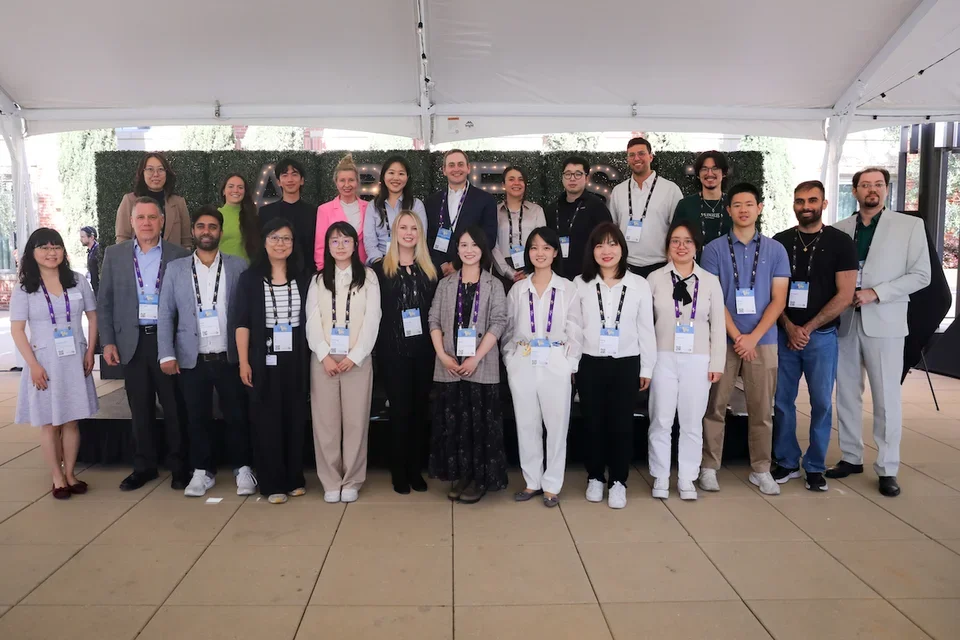
The week kicked off with Bioscience Talent Connection at UCLA James West Alumni Center, where early-career scientists, PhD students and graduate students from regional universities could connect with industry professionals.
Over the past five years, TDG has supported over 1,750 different inventors and helped them receive upwards of 2,000 patents worldwide. In turn, TDG has seen $460 million in gross licensing revenue and $345 million in industry-sponsored research awards.
With keen attention to medtech and biotech, LABEST includes a dedicated MedTech Day and Bioscience Conference as well as numerous panels, presentations and networking opportunities.
At the Bioscience Conference, over 900 attendees were welcomed by UCLA Chancellor Julio Frenk; Steven Dubinett, MD, dean of the David Geffen School of Medicine at UCLA; Amir Naiberg; and Judy Fortin, chief of communications at UCLA Health.
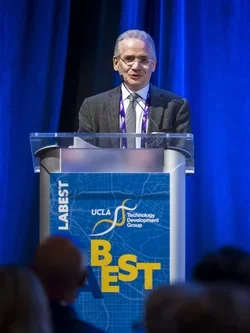
In his welcome remarks, Dean Dubinett said, "The UCLA medical school is a hub of progress, discovery and innovation, and its mission is clear: we're here to accomplish leading-edge patient care, research education as well as community engagement."
He also stressed that the school of medicine is training “the next generation of leaders in health care and bioscience” and applauded its faculty for “reshaping the future of medicine” with their discoveries.
Many school of medicine faculty, staff and students attended LABEST, and several faculty presented their latest research and technologies, discussed industry trends, or hosted panels. For example, Arie Belldegrun, MD, chair in urologic oncology, and founder and director of the UCLA Institute of Urologic Oncology, led a panel on “Emerging Trends in Bioscience,” and Eric Esrailian, MD, MPH (pictured above), chief of the Vatche and Tamar Manoukian Division of Digestive Diseases and health sciences clinical professor of medicine, moderated a panel on “Microbiome Science at UCLA: From Mechanics to Translation.”
In addition, Anne Andrews, PhD, professor of psychiatry, and her company FemSync, a femtech startup focused on wearable technology that monitors female reproductive hormones, received the top startup poster prize in the LABEST Pearl Cohen Scientific Poster Competition. She was joined by graduate student researchers, William Nguyen and Saga Vallow, from her lab.
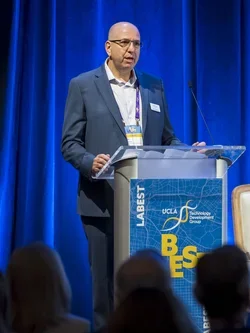
“At TDG, we partner with UCLA Health in building bridges between academics, investors and entrepreneurs. This often means helping researchers file patents, launch a company and fundraise, or connect to industry funding,” said Amir Naiberg, associate vice chancellor and CEO of UCLA TDG.
"We believe in the power of collaboration," concluded Naiberg.
Read more about LABEST and UCLA’s impact on scientific collaboration and innovation.
Related Articles