The Kavli Prize in Neuroscience awarded to professor emerita and former dean Kelsey Martin, MD, PhD and colleagues
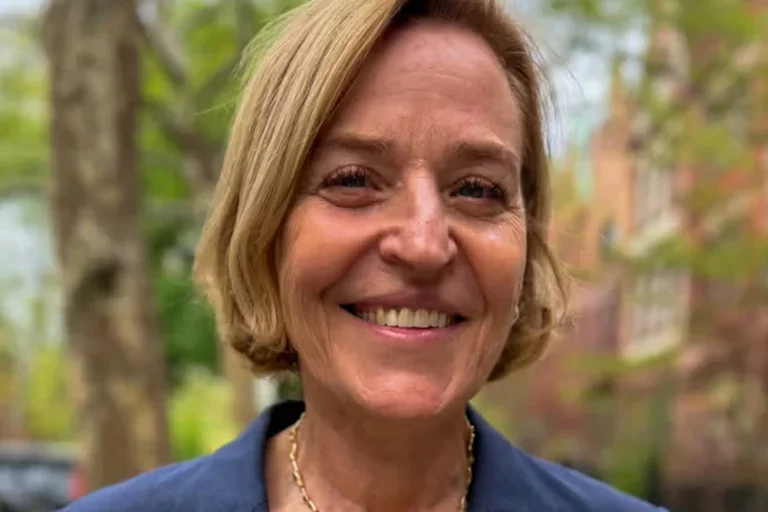
The Norwegian Academy of Science and Letters in Oslo, Norway announced the 2026 recipients of The Kavli Prizes, a prestigious honor that recognizes scientists in the fields of astrophysics, nanoscience and neuroscience whose groundbreaking discoveries are transforming our understanding of vital questions about how the world works.
Kelsey Martin, MD, professor emerita of biological chemistry, psychiatry and biobehavioral sciences and former dean of the David Geffen School of Medicine at UCLA (2015-2021), was awarded The Kavli Prize in Neuroscience along with colleagues Christine Holt, Erin Schauman and Oswald Steward “for the discovery of local protein translation in neurons and establishing its importance for brain development and plasticity.” The laureates will share a $1 million prize along with the honor, which will be presented in Oslo this September.
As quoted in the organization’s press release on June 10, Annelin Eriksen, President of The Norwegian Academy of Science and Letters, shared, “Honoring these excellent scientists is not only a recognition of achievements, it is an investment in our shared future, affirming the curiosity, rigor, and courage that drive human progress.”
Martin shared her response to the award through an article published by The Simons Foundation, where she serves as executive vice president of autism and neuroscience.
“I am honored to receive this recognition and to share it with such outstanding fellow laureates. This discovery was the product of many years of hard work from dozens of people, and I am heartened that its impact continues to shape the field.”
The Kavli Prize recognized Martin’s work to demonstrate “that separate branches of the same neuron can regulate synaptic strength independently through local translation.” Prior to her and her colleagues’ discovery, it was believed that proteins could only be produced directly from a cell body; after decades of research, the laureates were able to show that mRNAs localized within dendrites can be translated into proteins near synapses, transforming scientists’ understanding of how proteins can be produced.
An engaging video entitled “New clues to memory - The 2026 Kavli Prize in Neuroscience explained” showcases the intricacies of Martin and her colleagues’ discovery.
In her own words, written in a personally authored feature on The Kavli Prize’s website, Martin shared a powerful reflection.
“I have come to believe that progress in neuroscience is not the triumph of any single approach, but rather the stitching together of multiple levels of analysis.”
In fact, Martin continues to direct a research lab at DGSOM focused on the cell biology of synaptic plasticity and memory. There, she and her team focus on how different types of synaptic and neuromodulatory stimuli activate transcriptional networks in neurons and glia to alter gene expression necessary for changes in synaptic strength.
Her work, and her collaboratively accomplished award-winning discovery, offers hope for discovering new treatment options for patients whose brain diseases and disorders are linked to disrupted localized translation.
“I’ve generally been more interested in exploring new landscapes than in arriving at any final destination,” Martin wrote. “I suspect this may be a promising mindset for studying memory and the brain, where even after decades of progress, the most important questions resist resolution and keep getting more interesting.”
Related Articles