UCLA Medical Student Earns National Recognition for Digital Health Innovation
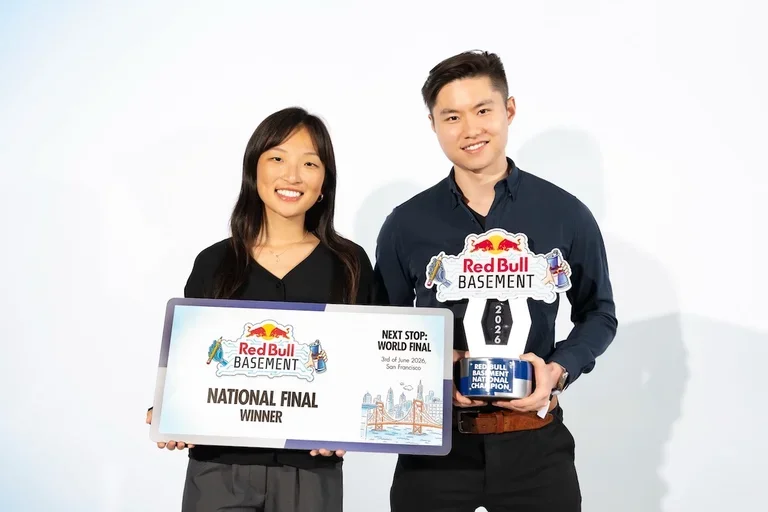
Medical student Hayoung Ahn has been named a Red Bull Basement U.S. National Winner for co-developing NeuroSense, a digital health platform designed to improve epilepsy care.
The Red Bull Basement competition amplifies student-led ventures that aim to address real-world challenges through technology and entrepreneurship. As one of three advancing U.S. teams, Ahn and her project partner presented at the Red Bull Basement World Final, held in San Francisco, along with student innovators from around the world who showcased their solutions to a panel of entrepreneurs, investors and industry leaders.
Although they did not take the global top place, Ahn remained proud of their national achievement. She shared, “We came home with sharper questions, valuable feedback and greater conviction that this is a problem worth continuing to solve.”
Powered by student innovation
Ahn pinpointed the challenge she wanted to tackle while pursuing her Doctor of Medicine degree at the David Geffen School of Medicine at UCLA. She credits her clinical training and neurology-related research with teaching her to pay attention to not only what happens during a patient encounter but also, what happens once they leave.
“I became interested in the gap between the continuous experience of living with a neurological condition and the brief snapshots clinicians receive during visits,” Ahn shared. “Patients may be asked to reconstruct months of seizures, medication adherence, sleep, stress, symptoms, and other changes from memory. NeuroSense grew out of asking whether technology could help make that time between visits more visible.”
Ahn reminds her medical school peers that they are in a valuable position: close enough to patient care to learn first-hand, and new enough to ask why things work the way they do.
“The first step can be as simple as speaking with the people affected, defining the problem more precisely, and building a small prototype that others can respond to."
Supported by education, motivated by mentors
At DGSOM, Ahn realized her varied interests didn’t have to remain separate: medicine, research, education, and innovation were all related. The revelation helped her connect the dots between her initial clinical observations and a practical digital solution that supported patient outcomes. Along the way, her neurology faculty mentors made all the difference.
“Dr. Katherine Fu and Dr. Shaun Hussain have shaped me in complementary ways as a clinician, educator and researcher. Working with Dr. Fu in clinic showed me what thoughtful, patient-centered neurological care looks like in practice, and more.Through my pediatric epilepsy research with Dr. Hussain, I learned what it means to bring rigor, persistence, and a profound sense of responsibility to caring for children with serious neurological conditions—and to keep asking how we can give our all to improve their lives.”
Focused on the future
Ahn continues to develop NeuroSense with co-founder Xuelong Mu as she moves through medical school. Her goal is to advance digital health solutions that strengthen the connection between patients and healthcare teams beyond the clinic.
To her fellow students who may be interested in improving healthcare through innovative ideas, Ahn shared some valuable advice.
“Pay attention to the moments when patients, families or health care teams have to compensate for a system that is not serving them well. Those points of friction often reveal the most meaningful opportunities for innovation.”
Lastly, she emphasized the value of leaning on your network and building new relationships with those around you, even outside of your field of study.
“If you find yourself with an idea, seek out collaborators whose skills differ from your own. NeuroSense became much stronger when my clinical insight was paired with my co-founder’s experience in engineering and real-time sensor systems. Health care innovation is inherently interdisciplinary, and humility about what you do not know is often what helps you assemble the right team.”
Related Articles